
During a symposium for PhD students at the University of Kurdistan, educational and research regulations were explained, with a strong emphasis on the necessity of moving towards demand-driven research, effective time management, and utilizing legal capacities to support dissertations.
Opportunities of the "Knowledge-Based Production Leap Law" Outlined at PhD Student Symposium
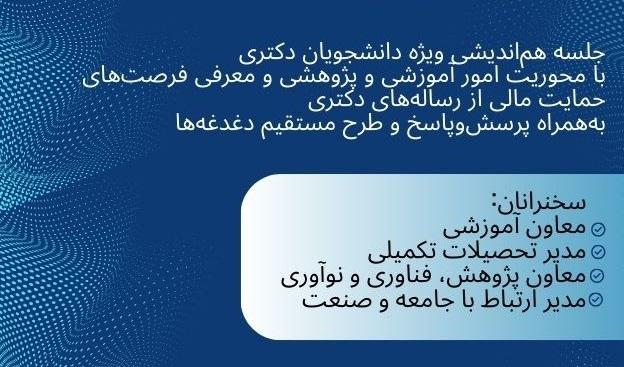



According to the Public Relations Office of the University of Kurdistan, the specialized symposium for PhD students was organized by the Directorate of Graduate Studies at Ferdowsi Hall, Faculty of Humanities and Social Sciences. University officials outlined the policies and opportunities available to students.
Academic Discipline: The Key to Success in Doctoral Studies
Dr. Mohammad Razzaghi, Vice President for Academic Affairs, opened the session by highlighting the pivotal role of PhD students in elevating the university's academic brand, deeming time management and regular follow-ups essential. "Continuous interaction with the department and supervisors is the most critical factor in preventing educational and research delays and avoiding extended study periods," he stated.
Subsequently, Dr. Marahem Ashangarf, Director of Graduate Studies, detailed the service structure and integrated educational regulations. Presenting an overview of the current status of disciplines, he emphasized the need for students to be fully aware of their rights and responsibilities and to adhere to approved timelines for proposal and dissertation defenses.
Research Funding: From the "NAN" System to the Iran National Science Foundation
The second part of the meeting focused on research. Dr. Bahman Bahramnezhad, Vice President for Research, Technology, and Innovation, listed "developing the innovation ecosystem" and "supporting mission-oriented research cores" as top priorities.
Introducing avenues for attracting financial support (grants), he remarked, "Students must move towards problem-oriented research and benefit from capacities such as the Iran National Science Foundation (INSF), the 'NAN' and 'SATE' systems, the National Elites Foundation, and the Knowledge-Based Production Leap Law."
Connecting Dissertations to Industry Needs via Tax Credits
Dr. Masoud Ebrahimi, Director of Community and Industry Relations, identified "problem definition" as the starting point for effective collaboration. Referring to Articles 11 and 13 of the Knowledge-Based Production Leap Law, he said, "Utilizing R&D tax credits is a practical path to support research projects and align dissertations with the real needs of the industry."
Dr. Ebrahimi also mentioned the university's memorandums of understanding with the West Oil and Gas Company and the Industry, Mine, and Trade Organization, announcing the university's readiness to facilitate field visits and access to industrial data.
The session concluded with a Q&A segment where PhD students shared their concerns with university officials, who promised to follow up on the raised issues through relevant departments.


Quick Links
Electronic Services
Useful Links


University of Kurdistan, Pasdaran Boulevard, Sanandaj, Iran

Postal Code: 6617715175

Phone: +988733664600-8

Email: info@uok.ac.ir


site visit
- today:
- yesterday:
- all:
Last Update
06 May 2026 - 08:02:21