
In a strategic summit attended by the presidents of universities in western Iran, the founding document of the "Zagros Universities Consortium" was signed with unanimous consensus.
Strategic Alliance of Western Iranian Universities: University of Kurdistan Joins the "Zagros Universities Consortium"
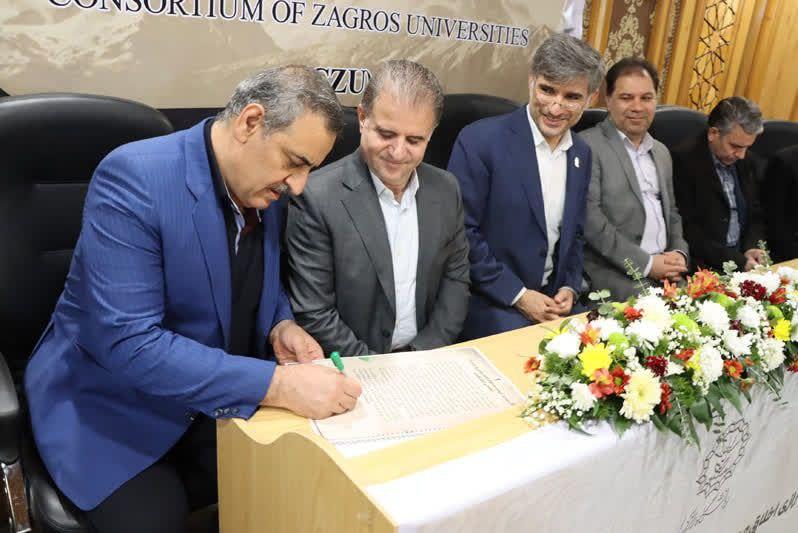



According to the Public Relations Office of the University of Kurdistan, during a specialized panel at the summit of western university presidents hosted by Razi University in Kermanshah, a historic step was taken to safeguard Iran's natural and civilizational heritage. The founding document of the "Zagros Universities Consortium" was officially signed by the region's university presidents.
Zagros: The Backbone of Iran's Sustainability
The consortium's founding statement emphasizes the status of the Zagros Mountains beyond a mere geographical phenomenon. As the mother ecosystem of the Iranian Plateau and the backbone of the country's climatic and hydrological stability, the Zagros has served as a cradle for civilizations and ecological balance for millennia. However, complex challenges such as forest decline, frequent wildfires, water and soil crises, and reduced resilience of local communities threaten this vital ecosystem. The signatories underscored that protecting the Zagros is not a choice but a national and intergenerational necessity, requiring a departure from sectoral approaches in favor of a comprehensive scientific perspective.
Ending Parallel Efforts through Academic Leadership
Past experiences have shown that the lack of a coordinated scientific authority and the fragmentation of actions have diminished the effectiveness of policies. Consequently, the "Zagros Universities Consortium" was established as a scientific and structured response to link academic capacities with the country's decision-making and executive processes.
Six Key Missions for Revitalizing Zagros
The consortium has defined its missions across six key axes, which will be pursued through a specialized division of labor among member universities, including the University of Kurdistan:
-
Smart Monitoring: Continuous, data-driven observation of the ecosystem status and the establishment of scientific observatories.
-
Crisis Management: Providing technological solutions for controlling wildfires and pests.
-
Biodiversity Conservation: Restoration of forests and natural habitats.
-
Water and Soil Resource Management: Scientific countermeasures against land erosion and degradation.
-
Social Resilience: Livelihood empowerment of local Zagros communities.
-
Advisory Authority: Scientific support for national and regional policy-making.
Model of Scientific Governance and Division of Labor
According to the signed document, the consortium will operate based on a "scientific governance" model. Each university will assume responsibility for specific missions commensurate with its scientific potential and geographical location. The consortium's secretariat will be based at Razi University, tasked with coordination and networking among members.
Academic Demands from the Government
At the conclusion of the summit, the presidents of the member universities, while pledging comprehensive cooperation, called upon the government—specifically the Ministry of Science and the Department of Environment—to recognize this consortium as a "scientific arm and specialized reference" for the Zagros region and to provide the necessary structural support to translate knowledge into executive action.


Quick Links
Electronic Services
Useful Links

University of Kurdistan, Pasdaran Boulevard, Sanandaj, Iran

Postal Code: 6617715175

Phone: +988733664600-8

Email: info@uok.ac.ir


site visit
- today:
- yesterday:
- all:
Last Update
28 Jan 2026 - 07:58:03