
At the meeting of the Passive Defense Committee of the University of Kurdistan, issues related to safety enhancement, infrastructure protection, crisis management, specialized training, and planning for the reinforcement of technical and executive capabilities were discussed and analyzed.
University of Kurdistan’s Passive Defense Committee Meeting Convened with a Focus on Safety Enhancement and Crisis Management
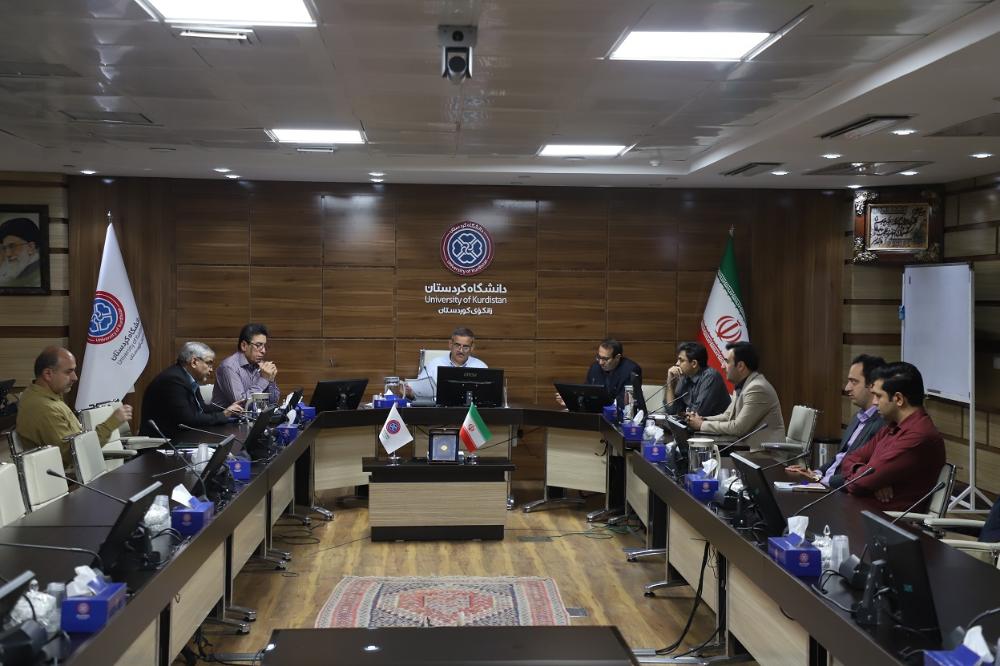



According to the Public Relations Department of the University of Kurdistan, the university's Passive Defense Committee meeting was held on Saturday morning, May 1, 2026 (12th of Ordibehesht, 1405), attended by the President, committee members, and relevant directors.
During this session, critical issues concerning the management and strengthening of passive defense, as well as the protection and security of university infrastructure during crisis situations, were deliberated.
At the beginning of the meeting, Dr. Adel Si-o-se Mardeh, President of the University and Chair of the Passive Defense Committee, while congratulating the audience on Teacher's Day, emphasized the significance of passive defense. He stated: "The effective management of physical protection, personnel security, and the safeguarding of university infrastructure during critical periods is valuable and commendable."
Referring to experiences from recent conflicts affecting various university units, he underscored the importance of ensuring emergency power supplies during crises and meticulous planning to determine infrastructural priorities across all departments. He added: "Optimizing energy consumption and adhering to safety protocols in this regard will safeguard the University of Kurdistan against potential crises."
Dr. Si-o-se Mardeh also addressed the university's development projects and their legal requirements, noting the necessity of safety compliance and proactive incident forecasting. He remarked: "Passive defense requirements must be integrated into development projects, and key considerations should be incorporated into the design and construction of new facilities."
Furthermore, Mohammad Samieifar, Director of Security and Secretary of the Passive Defense Committee, extended his congratulations on Teacher's Day and highlighted the role of passive defense within the policies and missions of the Ministry of Science and the University of Kurdistan. He noted that received directives have paved the way for fundamental transformation and announced the commencement of comprehensive planning in this area.
Evaluating the committee's performance in the previous year (1404) as positive, he reported the organization of various training courses—including sessions for dormitory supervisors, security personnel, and students—covering firefighting, medical emergencies, and the principles of passive defense. He further stated: "Plans are underway to continue these sessions through specialized training for senior managers and experts."
The Secretary of the Passive Defense Committee also touched upon the importance of recruiting and retaining technical and specialist personnel, the supervisory and protective role of the security department, coordination among various units in the field of defense, and the compilation of a comprehensive database of the university's critical infrastructure. He stressed the necessity of implementing practical measures to enhance protection and safety.
In the remainder of the session, committee members presented their views, proposals, and plans regarding equipment maintenance, crisis management, university property protection, and addressing essential requirements. The meeting concluded with an emphasis on the vital importance of cooperation across all departments to achieve the objectives of the Passive Defense Committee.


Quick Links
Electronic Services
Useful Links


University of Kurdistan, Pasdaran Boulevard, Sanandaj, Iran

Postal Code: 6617715175

Phone: +988733664600-8

Email: info@uok.ac.ir


site visit
- today:
- yesterday:
- all:
Last Update
06 May 2026 - 08:02:21