
Teaching and Research Laboratories of the Department of Biological Sciences
-
Biotechnology and Microbial Biology Laboratory: Equipped with a microscope, shaker, autoclave, fume hood, microbial culture incubator, freeze dryer, and workstation.
-
Animal Biology Laboratory: Features a microscope, zoological and histological specimens, and electrophoresis apparatus.
-
Cellular and Molecular Biology and Genetics Laboratory: Contains a microscope, fume hood, electrophoresis apparatus, oven, vortex mixer, and autoclave.
-
Animal Physiology Laboratory: Includes a fume hood, electrophoresis apparatus, workstation, vortex mixer, tissue processor, Western blot developing system, real-time PCR machine, and water bath.
-
Plant Physiology Laboratory: Furnished with a microscope, plant tissue culture incubator, culture room, and fume hood.
-
Biochemistry Laboratory: Equipped with a spectrophotometer, fume hood, centrifuge, oven, and rotary evaporator.
-
Shared Facilities (Cell Culture, Gel Documentation, and Spectrophotometry Rooms): These common areas house a cell culture hood, inverted microscope, CO2 incubator, water bath, PCR machine, electrophoresis apparatus, gel documentation system, refrigerated centrifuge, thermoblock, vortex mixer, spectrophotometer, and autoclave.
-
Herbarium and Plant Specimen Storage Facility
Animal Biology Laboratory
The Animal Biology Laboratory at the University of Kurdistan is situated in Room 403 on the fourth floor of the Faculty of Sciences building. This facility is dedicated to fulfilling the educational and research objectives related to zoology and animal biosystematics and is equipped with the fundamental resources required for these purposes.
The laboratory sessions are structured into two main sections: invertebrates and vertebrates. During these sessions, students are provided with prepared microscopic slides and macroscopic zoological specimens for examination. The curriculum covers:
-
The structure and diversity of Protozoa.
-
The structure and diversity of Platyhelminthes (flatworms).
-
The structure and diversity of Nematoda (roundworms).
-
The structure of Annelida (segmented worms).
-
The structure and diversity of Arthropoda.
-
The structure and diversity of Mollusca.
-
The structure of Protochordata.
-
Dissection of vertebrates and comparative anatomy of fishes, amphibians, reptiles, birds, and mammals, including the vertebrate skeletal system.
-
Microscopic examination of parasitic taxa, including staining and slide preparation techniques for parasitic worms.
In addition to its educational role, the laboratory supports research in animal biosystematics, which includes:
-
Scientific field trips for the collection of various taxa, including cartilaginous and bony fishes and their associated parasites.
-
Identification and description of new animal species using morphological and molecular characteristics.
-
Ecological studies of helminth parasites.
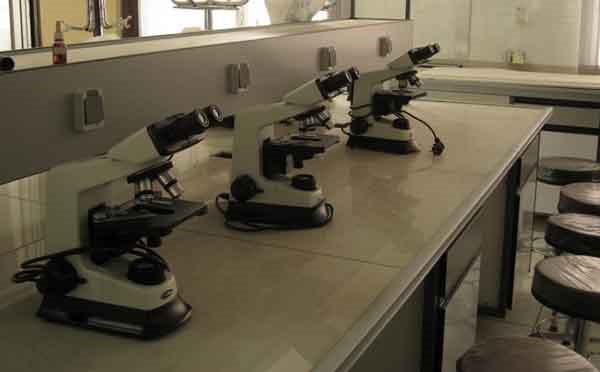
Available Equipment: The laboratory is equipped with microscopes, zoological and histological specimens, and electrophoresis apparatus.
Animal Physiology Laboratory
The Animal Physiology Laboratory was established and equipped in 2008 by Dr. Shamseddin Ahmadi. This facility hosts the practical laboratory sessions for the "Animal Physiology I" and "Animal Physiology II" courses for undergraduate students in the General Biology program, which are held during the first and second semesters of the academic year, respectively. Additionally, the practical course in Animal Physiology for students in the Biotechnology program is conducted in this laboratory during the second semester of each academic year. The laboratory is currently furnished with the necessary equipment to perform a diverse range of physiological experiments, making the practical sessions both engaging and highly beneficial for students.
In addition to its educational mandate, the Animal Physiology Laboratory is a center for research, with a particular focus on neuroscience. Through the continuous efforts of Dr. Ahmadi, the laboratory has been outfitted with suitable research facilities to support projects in the fields of behavioral and molecular neuroscience. His research investigates the mechanisms underlying morphine-induced analgesia, tolerance, anxiety, and memory in laboratory mice. This research is conducted at both the molecular level, involving the analysis of gene and protein expression, and the behavioral level, utilizing various behavioral tests such as the hot plate, elevated plus maze (EPM), and passive avoidance tests. The requisite research facilities for these studies are available within the Physiology and Neuroscience Laboratory as well as the central research laboratory of the Department of Biological Sciences and Biotechnology.
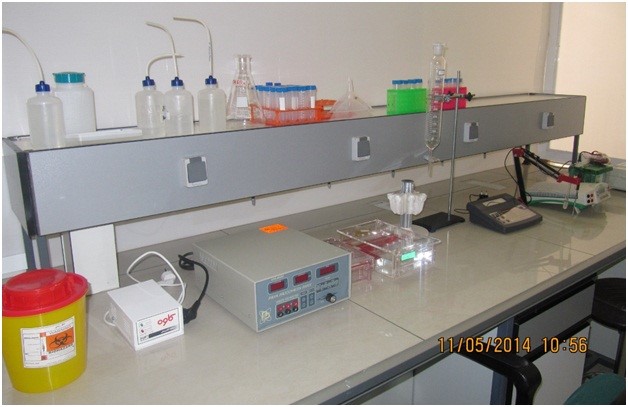
Available Equipment: The laboratory is equipped with a fume hood, electrophoresis apparatus, workstation, vortex mixer, tissue processor, Western blot developing system, real-time PCR machine, and a water bath.
Plant Systematics Laboratory
The Plant Systematics Laboratory is a recently established facility within the Faculty of Sciences. Over the past several years, it has been dedicated to developing a comprehensive database of the region's flora by collecting a wide array of native and non-native plant specimens from the province.
Currently, the practical laboratory sessions for the "Plant Systematics I" and "Plant Systematics II" courses, offered to students in the General Biology program, are conducted in a shared space (Room 103) that also serves as the repository for plant specimens. It is anticipated that in the near future, with the full establishment of a dedicated herbarium, the instructional component of these courses will be relocated to a separate, specialized laboratory. Additionally, a "Plant Biology Laboratory" course is offered to students in the Biotechnology program. The practical sessions for this course are held in the Plant Anatomy Laboratory (Room 418), where the available facilities provide students with opportunities for engaging and valuable observational studies.
Available Equipment: The laboratory is furnished with microscopes, a plant tissue culture incubator, a culture room, and a fume hood.
Plant Systematics Laboratory I:
-
Introduction to plant collection, drying techniques, and herbarium preparation.
-
Familiarization with resources used in plant classification and their proper application.
-
Learning the methodology for creating plant identification keys.
-
Study of representative specimens of Bryophytes.
-
Study of representative specimens of Pteridophytes.
-
Study of representative specimens of Pre-Phanerogams.
-
Study of representative specimens of Chlamydosperms.
-
Study of representative specimens of Coniferophytes.
-
Study of representative specimens of monocotyledonous Angiosperms.
Plant Systematics Laboratory II:
-
Study of dicotyledonous plant families within the Apetalous group (unisexual and hermaphroditic apetalous plants).
-
Study of dicotyledonous plant families within the Dialypetalous group (polypetalous plants).
-
Study of dicotyledonous plant families within the Gamopetalous group (sympetalous plants).
Plant Biology Laboratory:
-
Identification of laboratory instruments and materials.
-
Techniques for the preparation of plant specimens.
-
Staining methods for plant tissues.
-
Observation of plant cells.
-
Examination of starch grains.
-
Study of various types of plant tissues.
-
Analysis of sections of plant organs.
In conjunction with these educational activities, the laboratories will support research aligned with the field of plant systematics. These research activities will encompass the following areas:
-
Conducting floristic surveys at the provincial level.
-
Performing cytogenetic studies on various plant species.
-
Utilizing DNA barcoding for the identification and characterization of different plant species.
-
Conducting molecular studies for phylogenetic analysis at various taxonomic levels.
-
Herbarium and Plant Specimen Storage Facility
Biochemistry Laboratory
The establishment of this laboratory dates back to 2007, approximately one year after the admission of the first cohort of undergraduate students in Biology. Since its inception, the laboratory has been progressively equipped, and its educational and research activities have advanced in parallel.
Available Equipment: The laboratory is equipped with a spectrophotometer, a fume hood, a centrifuge, an oven, and a rotary evaporator.
Microbiology Laboratory
Since antiquity, humanity has harnessed its intellectual and practical resources to utilize microorganisms for addressing societal needs and mitigating challenges.
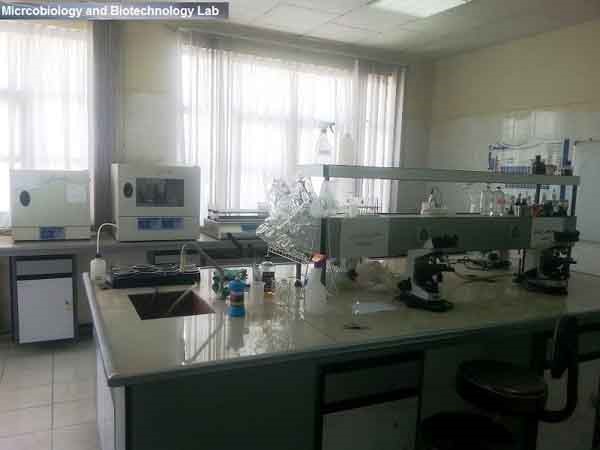
The Microbiology and Biotechnology Laboratories, part of the Department of Biological Sciences and Biotechnology at the Faculty of Sciences, University of Kurdistan, are recently established facilities. Through the collaborative efforts of the department's faculty, the support of the university administration, and the dedicated endeavors of Dr. Ashnagaref, these laboratories have been furnished with a commendable range of equipment. This infrastructure is designed to support and advance educational and research activities across various domains of biotechnology, including microbiology, industrial biotechnology, environmental biotechnology, and nanobiotechnology.
Educational Section: Microbiology and Biotechnology
|
|
|---|---|
|
|
Research Section: Industrial Microbiology and Biotechnology
Contemporary microbial biotechnology, as a discipline encompassing a wide range of life science technologies, offers solutions to many of the fundamental challenges facing human societies in diverse sectors, including industry, the environment, pharmaceuticals, medicine, agriculture, and energy. Proficiency in this modern field is crucial for enhancing a nation's developmental capacity and accelerating its progress in today's industrialized world.
In this context, the mission of the Microbial Biotechnology Laboratories at the Faculty of Sciences, University of Kurdistan, is to conduct targeted biotechnological research. This research focuses on the application of microorganisms as green chemistry-based catalysts for the production of high-value-added pharmaceutical and medical products, the remediation of toxic environmental pollutants, and the development of biological methods for nanoparticle synthesis.
Equipment of the Biotechnology and Microbial Biology Laboratory: The laboratory is equipped with a microscope, shaker, autoclave, fume hood, microbial culture incubator, freeze dryer, and workstation.
Plant Physiology Laboratory
Established in October 2008, the Plant Physiology Laboratory (Room 418) serves as the instructional facility for the "Plant Physiology Laboratory I" and "Plant Physiology Laboratory II" courses for the undergraduate program in General Biology. It also hosts the "Plant Physiology Laboratory" course for the undergraduate program in Biotechnology.
The ten experiments designed for the undergraduate Plant Physiology Laboratory course in the Biotechnology program are outlined in the table below:
Herbarium and Plant Specimen Storage Facility