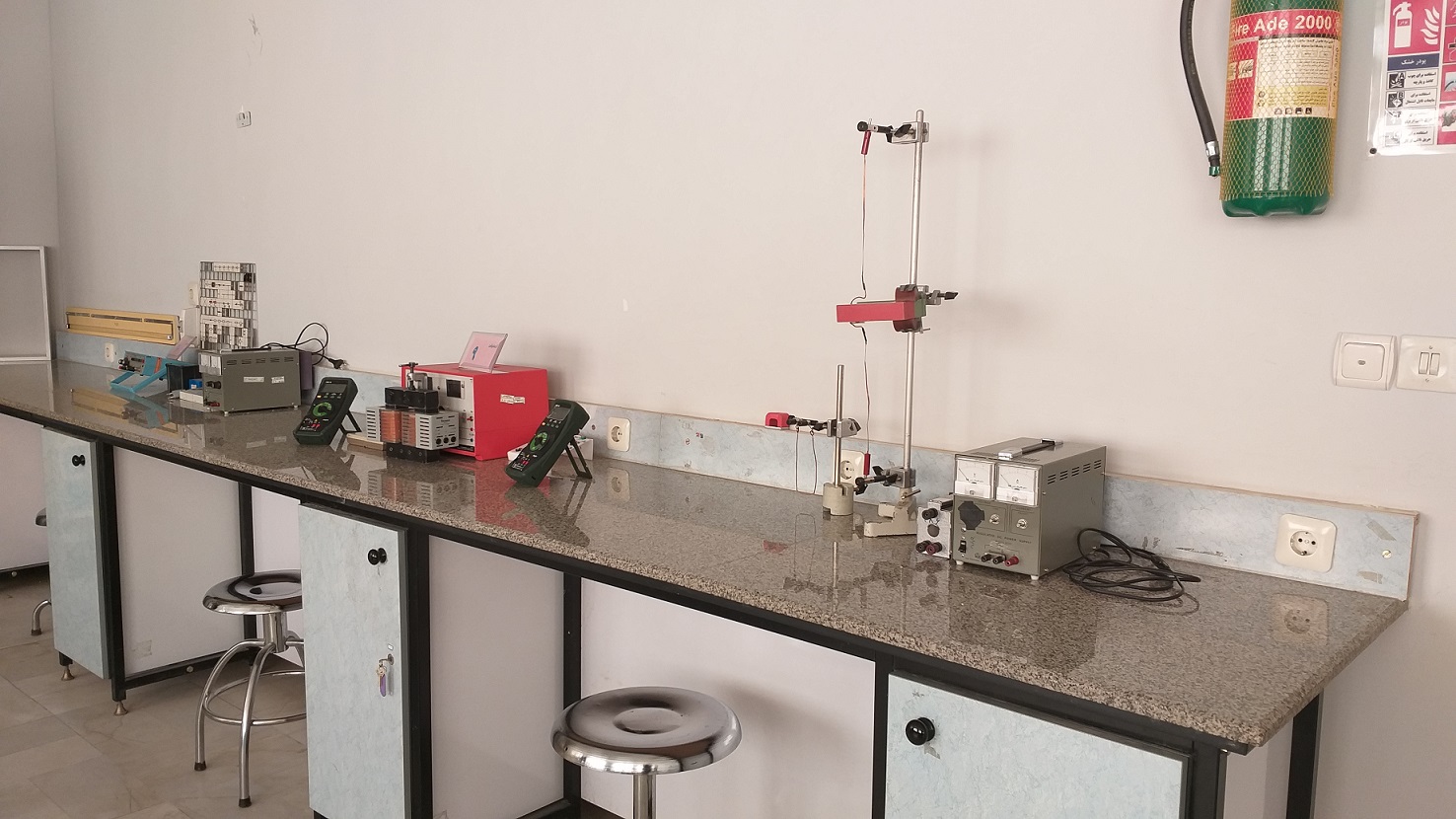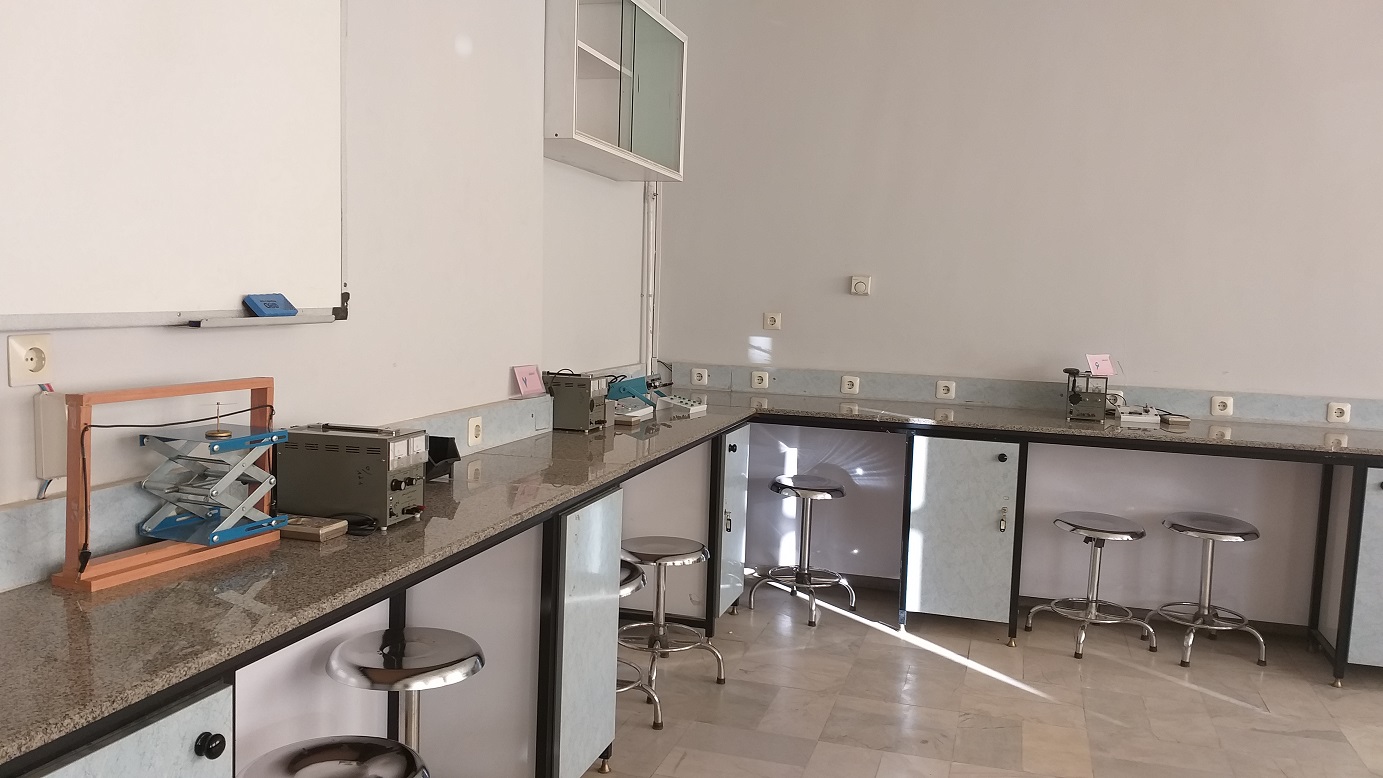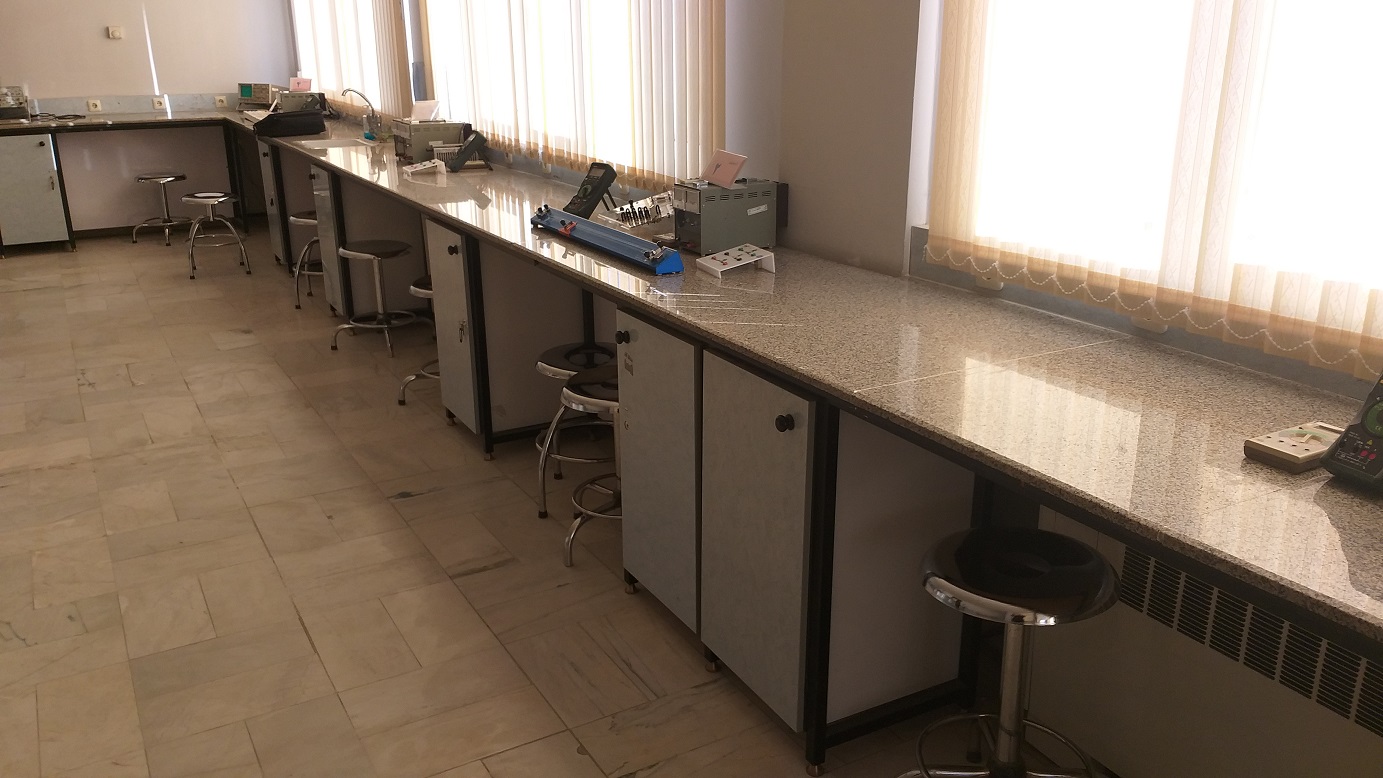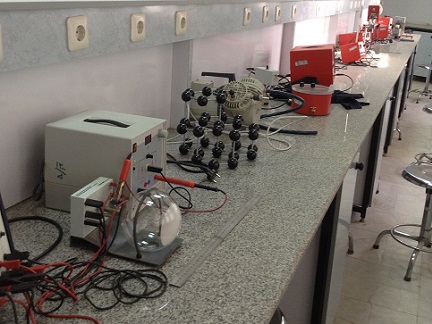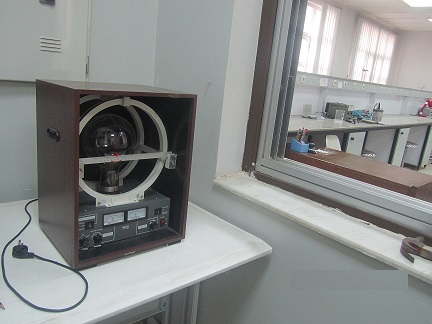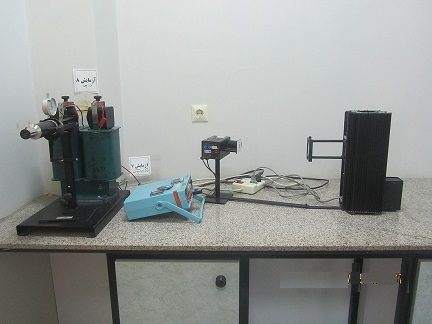
Educational and Research Laboratories and Workshops of the Department of Physics
| No. | Name of Educational Laboratory | Laboratory Type | Number of Experiments | Room Number | Other Essential Remarks |
|---|---|---|---|---|---|
| 1 | General Physics Laboratory I | Educational | 12 | 203 | This laboratory offers 12 specialized experiments for physics majors and 10 distinct experiments for students from other departments across the university's various faculties. |
| 2 | General Physics Laboratory II | Educational | 11 | 204 | This laboratory facilitates 11 specialized experiments for physics majors and 10 distinct experiments tailored for students of other disciplines across all service-receiving faculties.
|
| 3 | General Physics Laboratory | Educational | 10 | 205 | This laboratory provides services to all departments within the Faculty of Agriculture and the Faculty of Natural Resources, aligned with the General Physics curriculum. In recent years (prior to the pandemic), due to the high enrollment of engineering students, the laboratory capacity was optimized for dual-user stations. Additionally, the facility is utilized for General Physics I experiments when necessary.
|
| 4 | General Physics Laboratory III | Educational | 10 | 216 | The instructional space for General Physics Laboratory III and General Physics Laboratory IV (Modern Physics) is currently shared within Room 216. This facility hosts 10 experiments for Physics III and 8 for Modern Physics, though only 6 of the latter remain operational due to equipment depreciation. It is important to note that the steam and humidity generated by the thermal experiments in Physics III pose a significant risk to the highly sensitive and costly instrumentation used in Modern Physics. Consequently, the physical separation of these two laboratories is essential to ensure the preservation and functional integrity of the equipment.
|
| 5 | General Physics Laboratory IV (Modern Physics) | Educational | 8 | 216 | The instructional space for General Physics Laboratory IV (Modern Physics) is shared with General Physics Laboratory III, with both sessions conducted alternately in Room 216. While 8 experiments are designated for Modern Physics, only 6 are currently operational due to equipment depreciation. It should be noted that the steam and humidity resulting from the thermal experiments in Physics III create an unsuitable environment for the highly sensitive and expensive instrumentation of Modern Physics. Therefore, partitioning this space is essential to maintain equipment performance and longevity. |
| 6 | Optics Laboratory | Educational | 7 | 202 | Due to significant spatial constraints within this specialized laboratory, the capacity per session has been reduced from 14 to 7 students. Consequently, the number of scheduled sessions has been doubled to accommodate the total student enrollment. |
| 7 | Solid State Physics Laboratory | Educational | 7 | 218 | This laboratory facilitates 7 specialized experiments specifically designed for students within the Department of Physics.
|
| 8 | Electrotechnics Workshop | Educational | 7 | 204 | The workshop is currently equipped to meet the fundamental requirements of physics students. While the facility possesses the potential to serve other departments within the Faculty of Science that require workshop units, it lacks a dedicated physical space. Consequently, sessions are currently conducted within the General Physics Laboratory II (Room 204) using available equipment, and enrollment is exclusively limited to students of the Department of Physics. |
| 9 | Advanced Solid State Physics Laboratory | Educational | 7 | 120 | This laboratory facilitates seven specialized experiments specifically designed for students within the Department of Physics. |
| 10 | Nanophysics Laboratory | Educational | 7 | 120 | This laboratory facilitates seven specialized experiments specifically designed for students within the Department of Physics. |
| 11 | Photonics Research Laboratory | Research | - | - | Supervisor: Dr. Abdullah Hassanzadeh |
| 12 | Laser and Nonlinear Optics Research Laboratory | Research | - | - | Supervisor: Dr. Masoud Ghotbi |
| 13 | Nanophysics and Thin Films Research Laboratory | Research | - | - | Supervisor: Dr. Bandar Astinchap |
| 14 | Condensed Matter and Nanomagnetism Research Laboratory | Research | - | - | Supervisor: Dr. Ali Aftabi |
History of the General Physics Laboratory
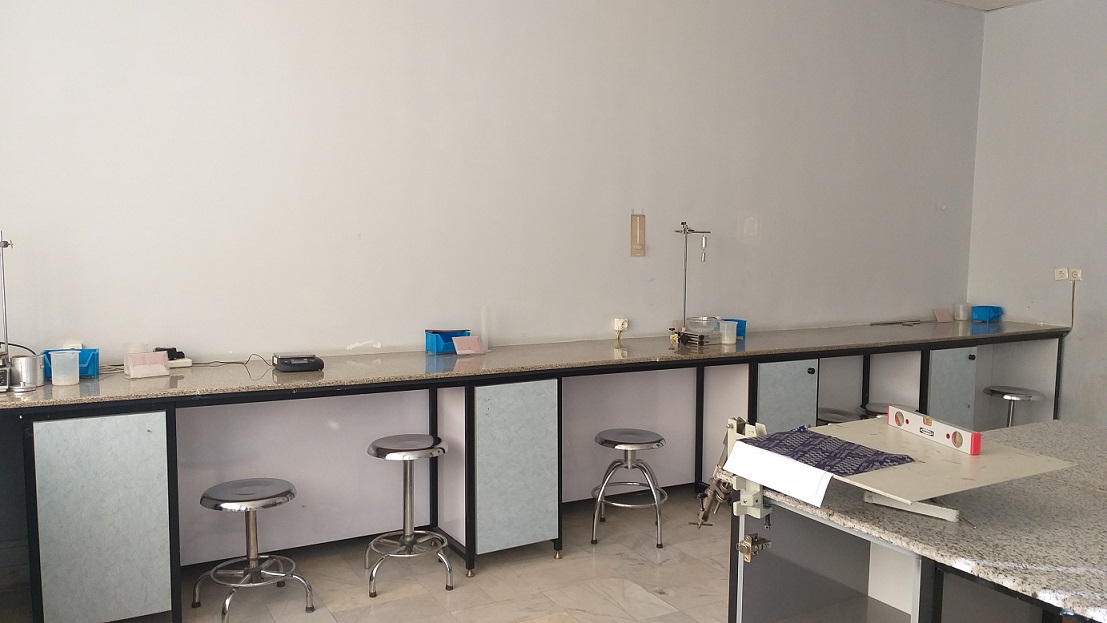
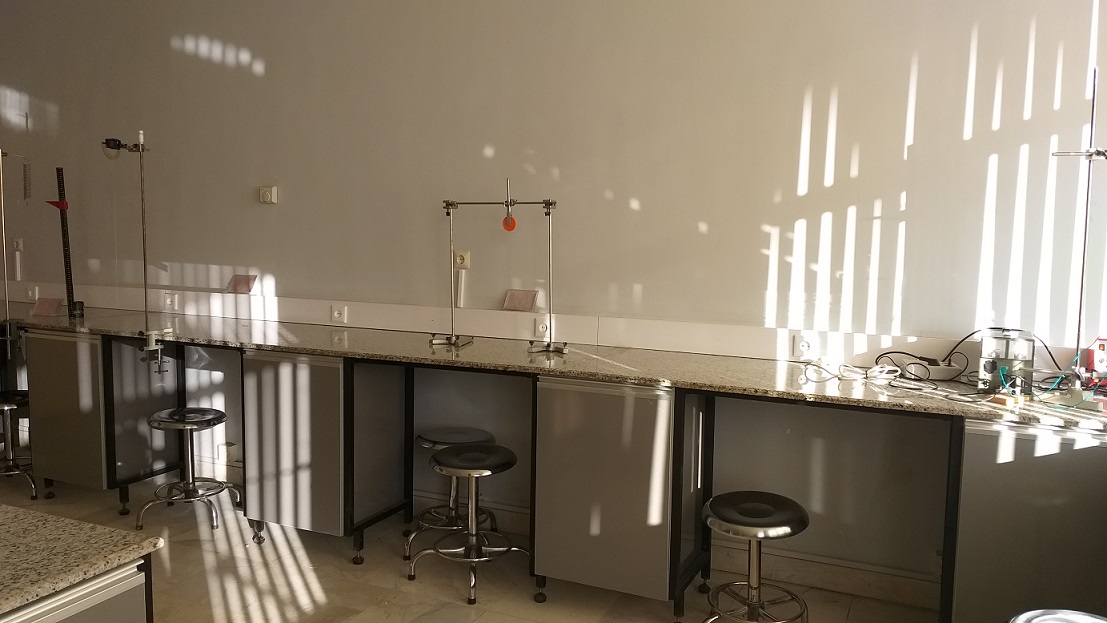
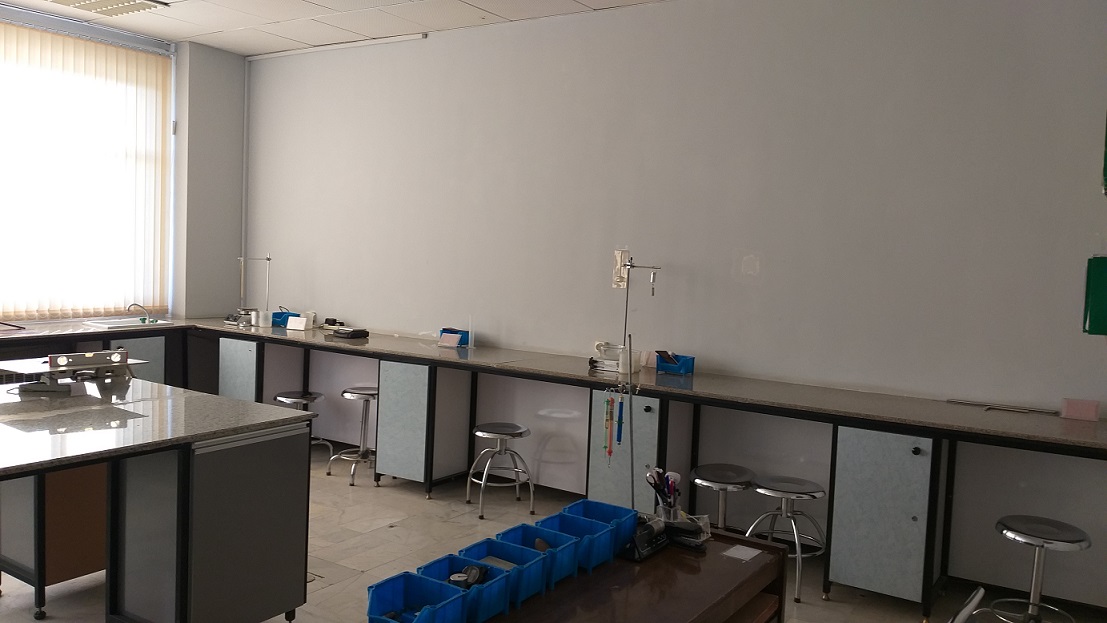
History of the General Physics Laboratory I
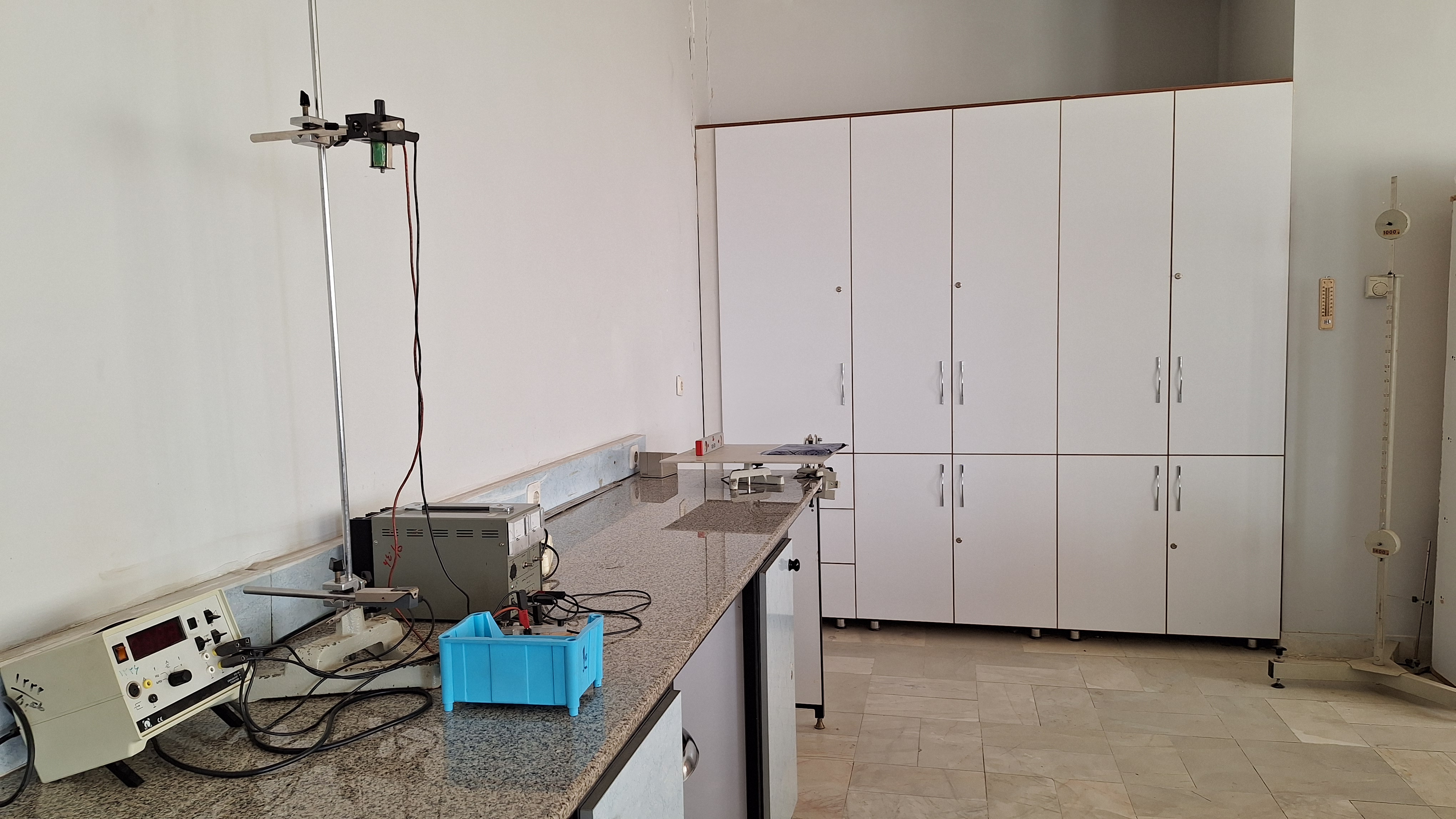
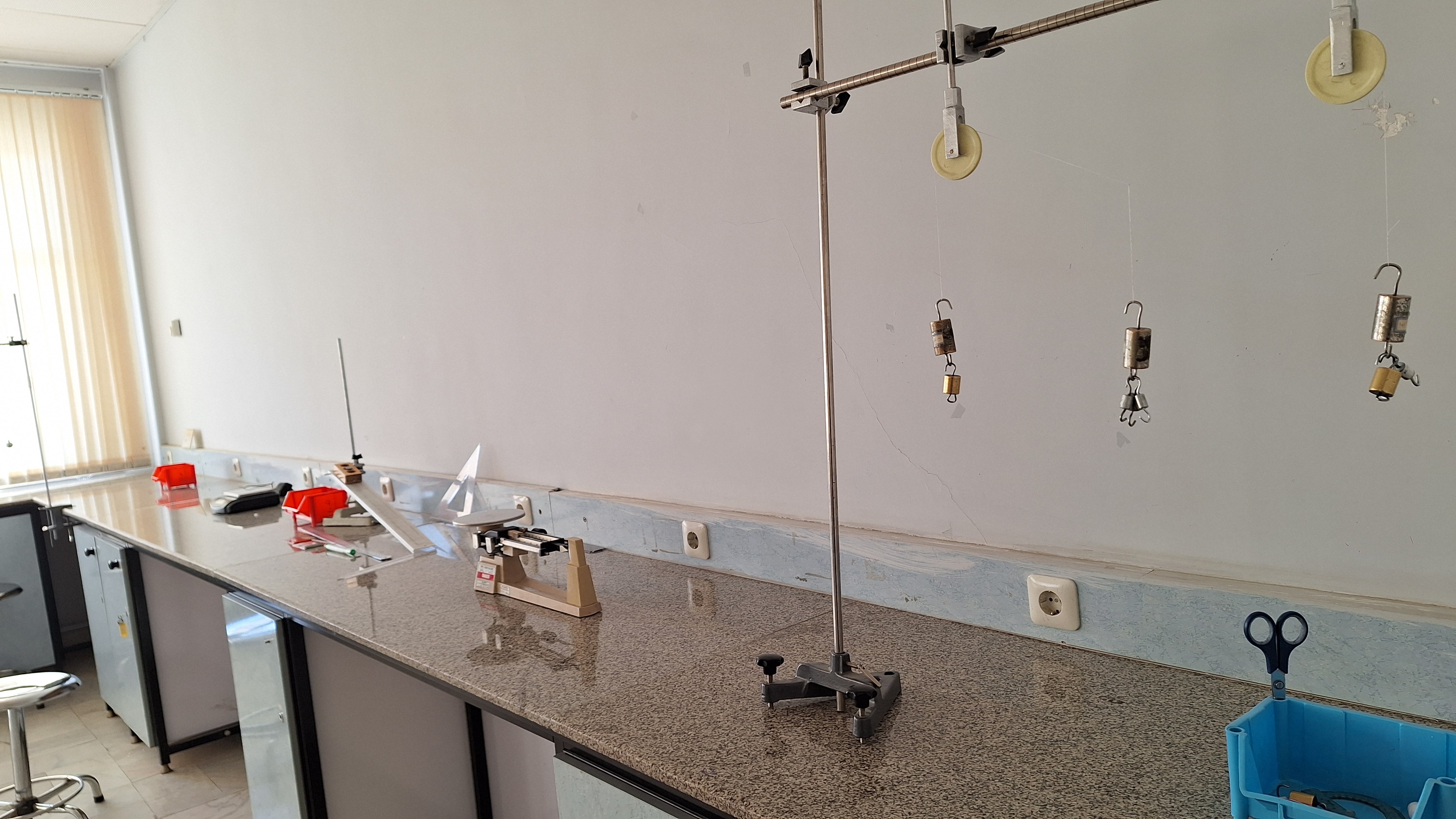
The establishment and inauguration of the General Physics Laboratory I at the University of Kurdistan dates back to the first semester of the 1976-1977 academic year, coinciding with the inception of the Teacher Training College of Sanandaj as a campus of Razi University. At that time, following the admission of students in Mathematics, Chemistry, English, and Persian Literature, the necessity of establishing a physics laboratory as a foundational course became evident. This facility was initially launched and equipped by Mr. Mohammad Reza Foroumand on the ground floor of what is currently the Faculty of Humanities. Following the administrative independence of the University of Kurdistan in 1991 and the subsequent academic expansion into basic sciences, engineering, and agriculture—most notably the establishment of the Physics Department in 1994—the physics laboratories underwent significant advancement. Currently, students majoring in Physics, along with those in other scientific and engineering disciplines, utilize this laboratory to conduct empirical and scientific investigations of the laws of Physics I, thereby facilitating a profound comprehension of theoretical concepts.
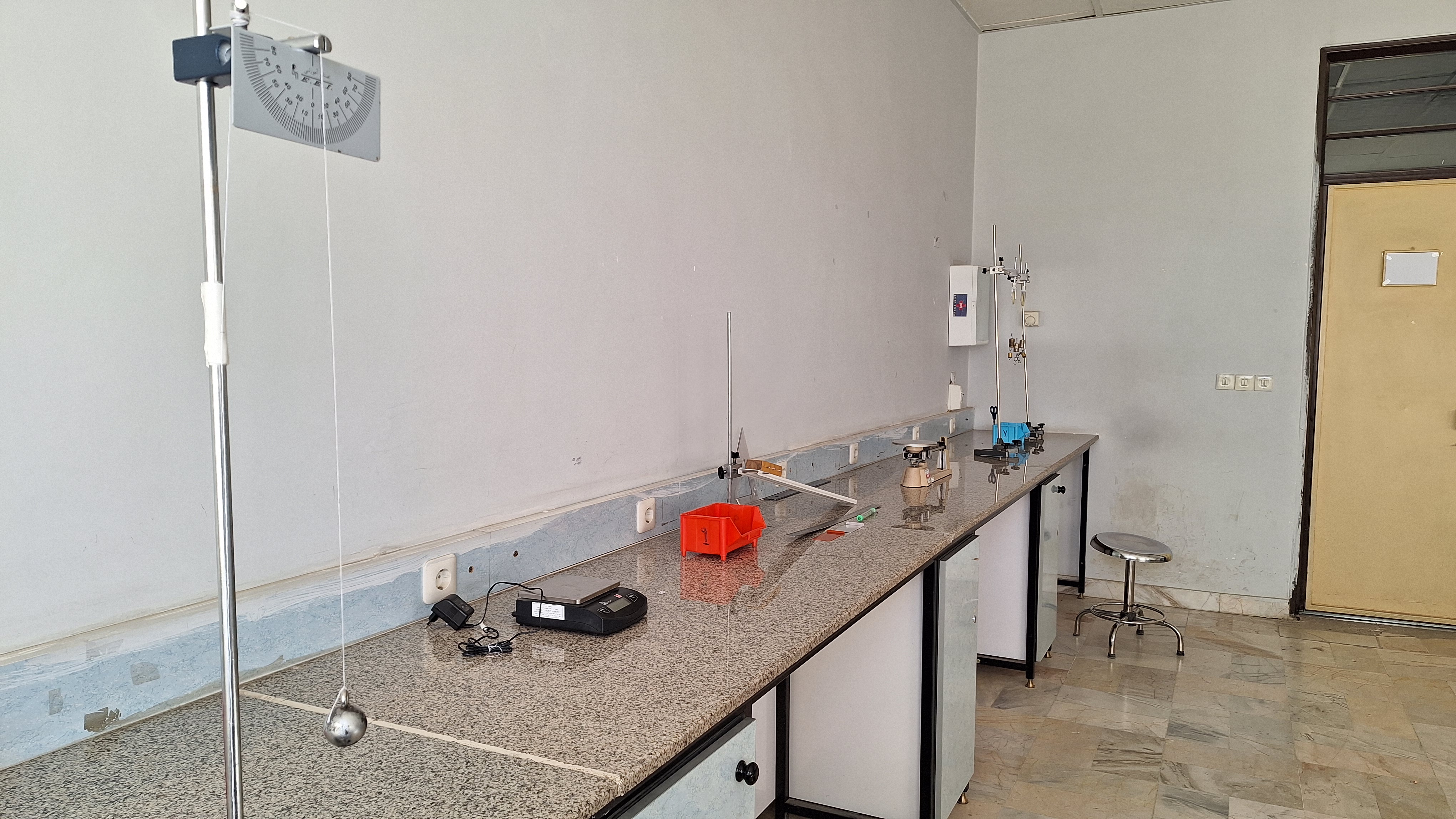
History of General Physics Laboratory II
The General Physics Laboratory II at the University of Kurdistan was established and equipped in 1978, coinciding with the university's foundation, under the stewardship of Dr. Abdulhossein Basireh and Mr. Mohammad Reza Foroumand. Initially, the facility was designed to provide educational services to students in the departments of Mathematics and Chemistry. Following the prestigious Iranian Physics Conference in the summer of 1994—widely recognized as one of the most significant scientific gatherings of its time—the laboratory officially expanded its operations in the autumn of that year to accommodate the first cohort of Physics students. Presently, the laboratory provides essential experimental training not only to the Faculty of Science but also to the Faculties of Engineering and Agriculture. The curriculum focuses on electromagnetism and the empirical verification of physical laws, comprising a series of structured experiments with specific pedagogical objectives.